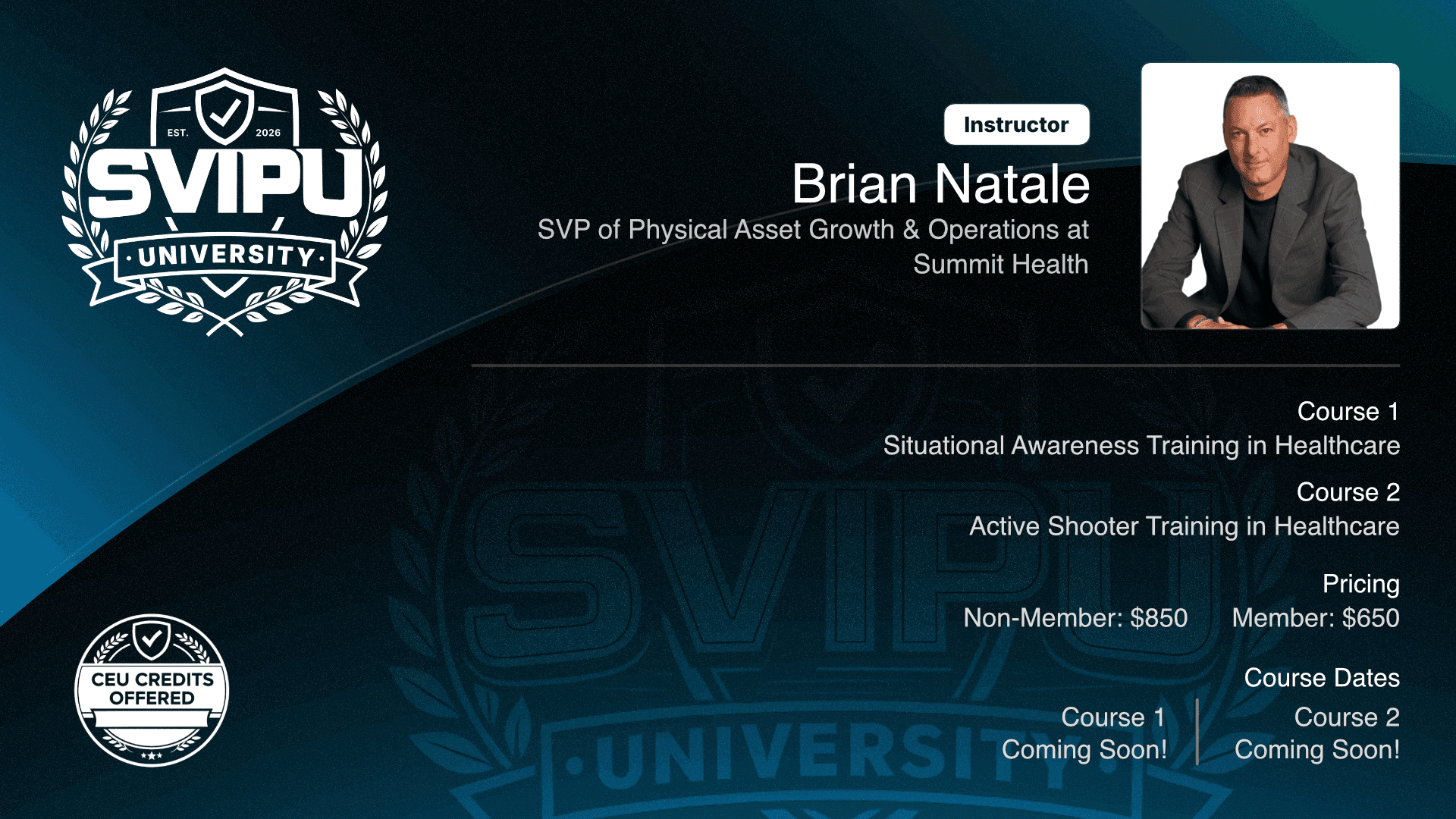
Instructor
Brain Natale - SVP of Physical Asset Growth & Operations at Summit Health
Course: Active Shooter Training in Healthcare
When: Coming Soon!
Where: Online (Link provided with registration)
Pricing
Non-Member: $850
Member: $650
Course Description
Active Shooter Training in Healthcare is an 8-hour, evidence-based professional course designed to prepare healthcare organizations to prevent, respond to, and recover from active shooter and active threat incidents—while maintaining patient safety, continuity of care, and regulatory compliance.
Led by Brian Natale, Senior Vice President of Physical Asset Growth & Operations at Summit Health, this course provides real-world insight into the unique challenges healthcare environments face during violent critical incidents. Unlike traditional active shooter training, this program is tailored specifically for hospitals, clinics, and healthcare campuses where evacuation is complex, patients may be immobile, and staff must balance life safety with patient care responsibilities.
Instruction focuses on pre-incident indicators, real-time decision-making, coordinated response, and post-incident recovery, emphasizing the roles of clinical staff, security, leadership, and external responders. Participants will learn how facility design, policies, communication protocols, and training directly impact outcomes during an active threat event.
The course also addresses trauma-informed response, reunification, continuity of operations, and organizational recovery, ensuring leaders understand not only how to respond during the incident, but how to support staff, patients, and families afterward.
Designed to meet continuing education standards, this course supports professional development in healthcare safety, workplace violence prevention, emergency preparedness, and crisis response leadership.
Learning Outcomes
Upon successful completion of this course, participants will be able to:
Understand the nature and evolving threat of active shooter incidents in healthcare settings
Identify pre-incident behavioral and environmental warning signs
Apply healthcare-appropriate response strategies during an active threat
Make informed decisions when evacuation, lockdown, or shelter-in-place options are limited
Coordinate effectively between clinical teams, security, leadership, and law enforcement
Manage communications during and after an active shooter incident
Support patient safety, staff accountability, and continuity of care during crisis events
Implement post-incident recovery, reunification, and trauma-informed practices
Strengthen organizational preparedness and resilience through lessons learned
Who Should Attend
Healthcare executives and administrators
Hospital and clinic operations leaders
Healthcare security and safety directors
Emergency department and trauma leadership
Nursing leadership and clinical supervisors
Behavioral health and outpatient clinic leaders
Risk management and compliance professionals
Facilities and physical asset management teams
Workplace violence prevention teams
Healthcare security integrators and solution providers
Content